
Photography Trends for Product Brands in 2026
- Jan 2
- 4 min read
Updated: Feb 9
Photography in 2026 isn’t about chasing shiny new tools or copying trends from Instagram. It’s about clarity, systems, emotion, and trust. Brands want visuals that work harder, last longer, and feel more human. Photographers who understand this will thrive. The rest will feel stuck.
This post breaks down the real product photography trends for 2026, with practical advice you can actually use, especially if you work with food, drink, lifestyle, and brand content.
What’s Changing in 2026 (Quick Overview)
Authentic beats perfect
AI supports the workflow, not the vision
Brands buy content systems, not single shoots
Imperfection builds trust
Nostalgia and retro aesthetics are back
Emotion matters more than resolution
Now let’s break it down properly.
1. Cloud Dancer: Pantone Colour of the Year
Soft off-whites and warm neutrals are everywhere in 2026.
Why it matters
Cloud Dancer isn’t just a colour trend. It’s a strategy. Minimal backgrounds help products stand out without shouting.
How brands are using it
Clean, high-end product photography
Food packaging with subtle contrast
Soft lifestyle scenes with texture from props, not backgrounds
Actionable tip
If you shoot product or food photography:
Use off-white backdrops
Add colour through ingredients, packaging, or hands
Let the product do the talking
This works exceptionally well for wellness brands, food & drink, supplements, and beauty.
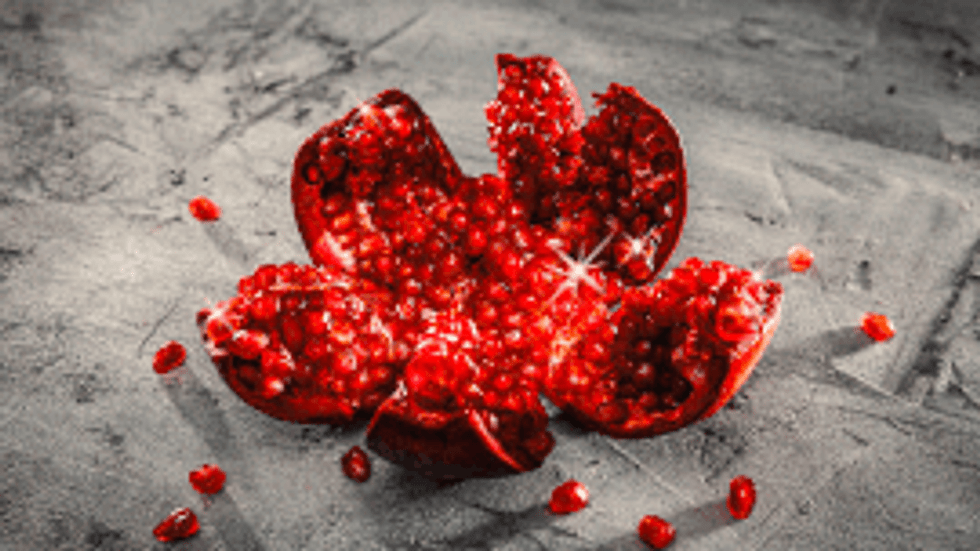
2. Flash Photography Is Back (And It’s Loud)
Hard, direct flash is officially back.
What it looks like
Strong contrast
Bold colours
Slightly messy, documentary feel
Early 2000s energy
Why brands love it
Flash photography feels real and unfiltered. It cuts through polished feeds and stops the scroll.
Best use cases
Food & drink launches
Fashion and lifestyle brands
Social-first campaigns
Creator-style ads
This style performs exceptionally well on Instagram, TikTok, and paid social.
3. AI as a Tool, Not a Replacement
AI is now part of professional photography workflows. But it’s not the star of the show.
How AI is actually used in 2026
Extending backgrounds
Fixing aspect ratios for social media
Faster retouching
Versioning images for different platforms
What clients care about
What’s real vs synthetic
Brand safety
Transparency
Actionable tip
If you use AI:
Use it to speed things up
Be open about it if asked
Never let it replace your creative decisions
AI should support your style, not define it.
4. The “Perfectly Imperfect” Aesthetic
Perfect is boring now.
What imperfection looks like
Crumbs on the table
Melted ice cream
Crooked stacks
Drips, spills, fingerprints
These details make images feel human and believable.
Why it works
People trust what feels real, especially in food photography and lifestyle product photography.
Actionable tip
Next shoot:
Don’t over-tidy
Leave one “almost wrong” detail
Let chaos breathe a little
That’s often the image brands choose first.

5. Retro Surrealism Makes a Comeback
Retro aesthetics mixed with slightly strange setups are trending hard.
Visual language
60s–90s colour palettes
Vintage props
Real sets built in-camera
Minimal digital manipulation
Why it works
Nostalgia triggers emotion. Emotion builds brand connection. This style is perfect for:
Creative product photography
Editorial-style brand campaigns
Stop motion and looping GIFs
How This Affects Different Types of Work
PRODUCT PHOTOGRAPHY
Less hero shots, more usable assets
Consistency over perfection
Designed for social, ecommerce, and ads
FOOD & DRINK
Messy, tactile, real
Ingredients in motion
Flash and imperfection perform well
VIDEO & ANIMATION
Short-form first
Stop motion and looping content grow
Designed for TikTok and Reels
PEOPLE & LIFESTYLE
Candid over posed
Emotion over polish
Natural light or bold flash
GRAPHICS & SOCIAL MEDIA
Vertical formats are default
Images must work fast
Designed for content systems
STUDIO & PROPS
More physical sets
Retro props
Texture over clean minimalism
The Big Shift: From Shoots to Content Systems
This is the most important trend. Brands no longer buy:
“One shoot day and a few images”
They buy:
Always-on content pipelines
What brands expect now
Multiple formats
High volume
Consistent look
Fast turnaround
Assets that work across platforms
Photographers who sell systems, not just images, will win in 2026.
FAQs: Product & Food Photography in 2026
What are the biggest product photography trends in 2026?
Authentic styling, imperfection, flash photography, AI-assisted workflows, and content designed for social media first.
Is polished product photography still relevant?
Yes, but only when it feels intentional. Over-polished images without emotion are losing impact.
What style works best for food photography in 2026?
Messy, tactile, real food photography with visible texture, movement, and personality performs best.
Do brands still want studio photography?
Yes, but studios are used more creatively, with physical sets, props, and real-world imperfections.
FAQs: Krisztian Studio
What does Krisztian Studio specialise in?
Krisztian Studio specialises in product photography, food & drink photography, stop motion, and creative still life.
Do you work with large brands or startups?
The focus is on medium to large brands, especially in food, drink, wellness, and lifestyle.
Do you offer stop motion and social content?
Yes. Stop motion and short-form content for Instagram, TikTok, and campaigns are core services.
Where is Krisztian Studio based?
London, UK. Projects are delivered for brands across the UK and internationally.
Final Thoughts
Photography in 2026 is not about fighting AI or chasing trends. It’s about using tools wisely, telling better stories, and creating content that actually works.
If you focus on:
Emotion
Consistency
Systems
Authentic visuals
You’ll stay relevant, valuable, and in demand.
If you want help creating scroll-stopping product or food photography built for 2026, you know where to find me. 📸✨
The Future of Product Photography
As we look to the future, it’s clear that the landscape of product photography is evolving rapidly. The trends we see today are just the beginning.
Embracing Change
We must embrace change and adapt to new technologies. The rise of AI and social media has transformed how we create and share content.
Building Connections
Building connections with audiences is more important than ever. Authenticity and emotion are key. Brands that can tell their stories effectively will stand out.
The Role of Community
Community plays a vital role in this evolution. Engaging with your audience and understanding their needs will help guide your creative direction.
Conclusion
In conclusion, the future of product photography is bright. By focusing on authenticity, emotion, and innovative techniques, we can create compelling visuals that resonate with audiences. Let’s make 2026 a year of creativity and connection!


Comments